
China’s New Company Law: What Your Business Needs to Know Now
On July 25, the Benelux Chamber of Commerce in Shanghai successfully hosted its first-ever Chinese-language seminar, welcoming members and partners to an in-depth session led by legal experts Karen Liu, and Ling Pan from HuiYe Law Firm. The topic: the key impacts of China’s new Company Law, which came into full effect on 1 January 2025.
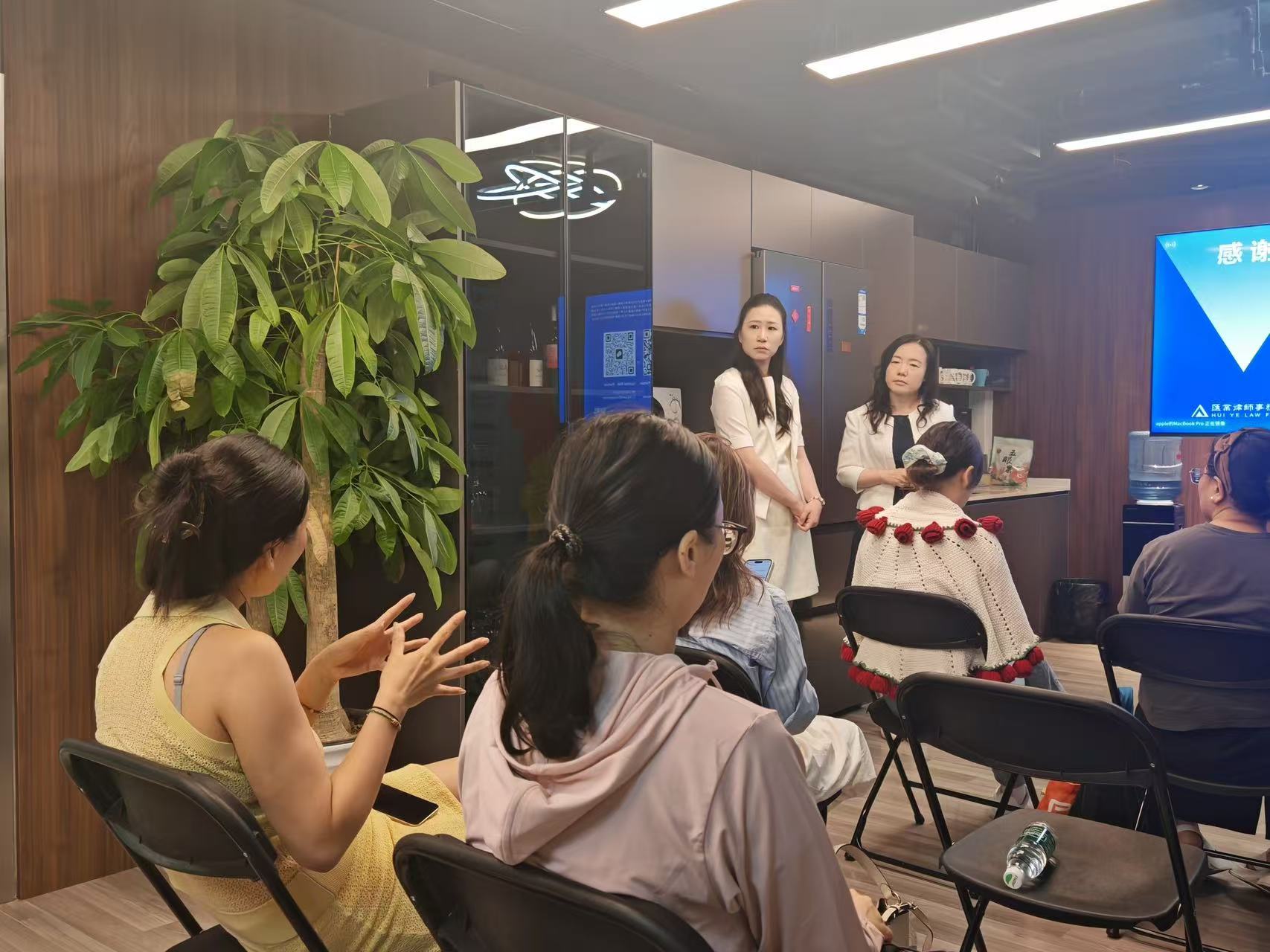
With the law triggering substantial changes for all limited liability companies (LLCs) operating in China—especially foreign-invested enterprises (FIEs)—the seminar attracted strong interest from the community and marked an important milestone in the Chamber’s efforts to offer more Chinese-language content.
Key Takeaways from the Seminar
1. Registration Freeze for Non-Compliant FIEs
Companies that did not convert to the new legal form before the January 1 deadline now face a complete filing freeze at the local market supervision bureau. This means no updates—whether for company name, registered address, or legal rep—will be accepted until compliance is achieved. Moreover, any pending applications are suspended and publicly disclosed, adding reputational pressure to administrative challenges.
2. Five-Year Countdown on Capital Contributions
For all LLCs registered before 30 June 2024, the clock is ticking: these companies must now revise their capital contribution schedules to meet a new five-year limit, effective from their next corporate change. Crucially, if a company is unable to pay its debts, creditors can demand immediate capital injection, even ahead of that five-year deadline. This “automatic acceleration” introduces significant financial risk for companies with delayed capital plans.
3. Expanded Personal Liability for Directors
Perhaps the most far-reaching change is the broadening of personal liability for directors. Under the new rules, directors now face joint-and-several liability for:
- Failing to monitor capital contributions;
- Approving illegal distributions;
- Allowing shareholder “capital flight,” such as unreported withdrawals or reductions.
Recent Supreme People’s Court rulings, cited during the seminar, have confirmed that directors can be held personally accountable for the entire capital shortfall, regardless of whether they personally benefited or were directly at fault.
The Chamber would like to thank HuiYe Law Firm for their insightful presentation and legal expertise. Given the high level of interest and positive feedback, we look forward to hosting more Chinese-language seminars in the near future.
Stay tuned for upcoming events and additional guidance on adapting to China’s evolving legal landscape.